Why You Shouldn't Book a 'Cheap' Kilimanjaro Tour
Sarah K.
Gear & Logistics Specialist
The hidden costs of low-budget operators. Understand the ethics of porter treatment and the safety risks of cut-rate guide companies.
If a Kilimanjaro tour price seems too good to be true, it probably is. Choosing a "cheap" operator can jeopardize your safety and ethically compromise your climb.
The Hidden Cost of Low Prices
Kilimanjaro park fees, rescue fees, and taxes are fixed for everyone (roughly $800-$1,100 per person). If an operator is charging you less than $1,800, they have very little left to cover food, equipment, and staff wages.
4 Dangers of Budget Operators
Inadequate Safety Gear
Cheap tours often skip expensive safety equipment like supplemental oxygen, pulse oximeters, and comprehensive medical kits. In an emergency, these can be the difference between life and death.
Unethical Staff Treatment
Budget companies often underpay their porters or expect them to survive solely on tips. They may also provide inadequate food and sleeping conditions for the staff carrying your gear.
Substandard Equipment
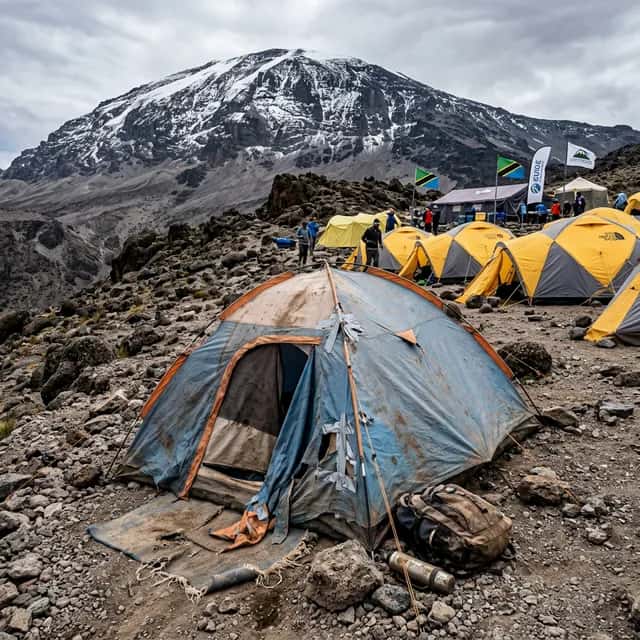
Leaking tents, worn-out sleeping mats, and broken stoves are common issues with low-budget operators. Staying dry and warm is essential for reaching the summit.
Low Quality Food
Proper nutrition is fuel for your climb. Cheap operators often provide low-calorie, repetitive meals that don't give you the energy needed for a 12-hour summit push.
How to Spot a Quality Operator
- Membership in the Kilimanjaro Porters Assistance Project (KPAP).
- Providing a minimum of 1 guide for every 2-3 climbers.
- Explicitly listing safety equipment like emergency oxygen and oximeters.
Closing Thoughts
Saving $500 on a trek might seem appealing, but the risks to your health and the ethical impact on local workers far outweigh the savings. Choose an operator that values its staff and your safety above all else.
Want to know where your money goes? Read our Full Kilimanjaro Cost Breakdown.