What to Wear on Kilimanjaro Summit Night
Sarah K.
Gear & Logistics Specialist
Tiered layering strategies for extreme cold. How to dress to survive -20°C temperatures and high winds at 5,895 meters.
"Summit night is the most extreme cold you will likely ever experience."
The Cold Truth
Starting at midnight from Kibo or Barafu Camp, temperatures drop to **-15°C to -25°C (5°F to -13°F)**. Add in the high wind chill at Stella Point, and it's dangerous. Proper layering is not just for comfort; it's for safety.
Layering for Success
4-5 layers on the upper body (Base, Fleece, Down jacket, Hard shell). 3 layers on the legs (Thermal base, Hiking pants, Gore-Tex shell).
Extremity Care
Double glove system (liner + heavy mitts). Two pairs of wool socks. A thermal balaclava and a warm beanie. Hand and toe warmers are highly recommended.
The "Frozen Water" Problem
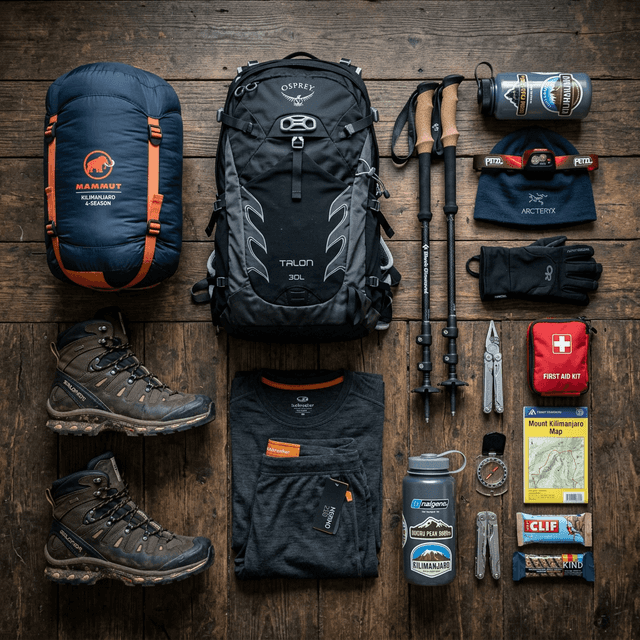
At -20°C, your hydration bladder tube will freeze solid in minutes. To prevent this, blow air back into the tube after every sip, or use insulated bottles like Nalgene with a thermal cover, stored upside down in your pack.
Headlamp: The Most Critical Piece
You will hike for 6-8 hours in total darkness. Batteries drain 5x faster in the cold. Keep your spare batteries inside your jacket (close to your body) until you need them.
Summit Night Checklist
- High-power Headlamp (with fresh batteries).
- Thermal balaclava or neck gaiter.
- Heavy down "Summit" jacket (Rated for -20°C).
- Heavyweight mittens over liner gloves.
See the full gear suggestions in our Ultimate Packing List.