Marangu Route Guide: The 'Coca-Cola' Path
David M.
Lead Expedition Guide
Everything you need to know about the Marangu Route. Discover why this hut-based path is the cheapest, but has the lowest summit success rate.
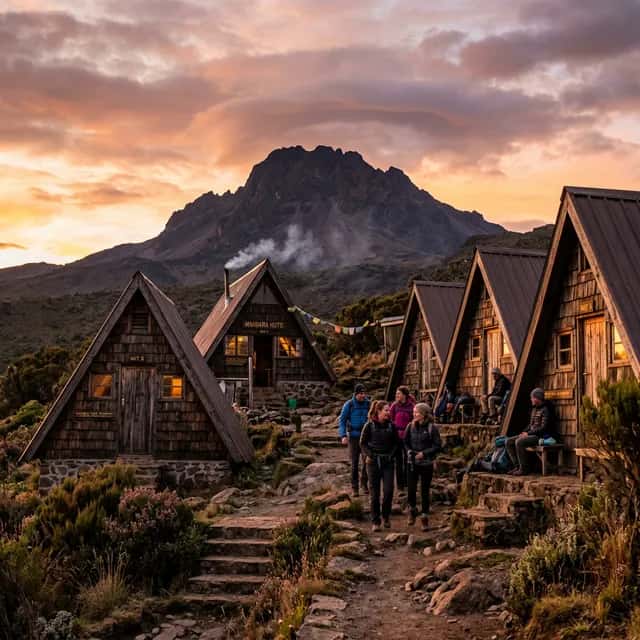
The Marangu Route, famously known as the "Coca-Cola" route, is Kilimanjaro's oldest and most established path. It remains the only route that offers dormitory-style hut accommodations, making it a favorite for those who prefer to avoid sleeping in tents.
Why the "Coca-Cola" Route?
The name is a historical relic from the days when Marangu was the only accessible route and hikers could literally buy a bottle of Coke at the Mandara and Horombo huts. Today, while it is still considered the "easiest" route in terms of terrain, its summit success rate is actually among the lowest on the mountain due to the rapid ascent time of many 5-day itineraries.
The Pros
- • Hut Comfort: No sleeping in tents; real bunk beds with foam mattresses.
- • Cheapest Option: Lower logistics costs make it the most budget-friendly path.
- • Shortest Distance: Physically the shortest way to reach the crater rim.
- • Safe Descent: The downhill path is well-maintained and less technical.
The Cons
- • Poor Acclimatization: Rapid altitude gain leads to more altitude sickness.
- • Crowds: It is the second most popular route and can feel "over-touristed."
- • Less Scenic Variety: You go up and down the same path, missing half the mountain's views.
- • Noisy Huts: Sharing a room with 6-12 strangers can make sleeping difficult.
Life in the Kilimanjaro Huts
Sleeping in huts sounds like a luxury compared to camping, but keep your expectations in check. The huts (Mandara, Horombo, and Kibo) offer communal bunk beds. You still need a 4-season sleeping bag rated for at least -15°C (5°F).
Mandara Huts (2,700m)
Located in the lush rainforest belt. If you take the 6-day version, this is your first night. The humidity is high, and the A-frame structures are surprisingly cozy.
Horombo Huts (3,720m)
The largest camp. On the 6-day route, you spend two nights here (Day 2 and 3). This is where the "Coca-Cola" vibe is strongest, with large communal dining halls.
Kibo Huts (4,700m)
Base camp for the summit push. It is essentially a large stone building. It's cold, barren, and filled with tension as climbers prepare for the midnight summit start.
The 6-Day Itinerary (Recommended)
We strongly advise against the 5-day itinerary. The success rate drops by nearly 40% without the extra day at Horombo:
- Day 1: Marangu Gate to Mandara Hut (3-4 hours trek through rainforest).
- Day 2: Mandara Hut to Horombo Hut (5-6 hours trek emerging into the moorland).
- Day 3: Mandatory Acclimatization Day. A short hike to Zebra Rocks and back to Horombo for a second night.
- Day 4: Horombo Hut to Kibo Hut (Crossing the desloate alpine desert 'Saddle').
- Day 5: Summit Day! Midnight push to Gillman's Point and Uhuru Peak, then back down to Horombo.
- Day 6: Horombo Hut to Marangu Gate for your summit certificate.
The Acclimatization Warning
Statistically, Marangu is easier on the legs but harder on the lungs. Because the path doesn't follow the "climb high, sleep low" principle as well as the Lemosho route, you must be extremely diligent about your pace. "Pole pole" (slowly, slowly) is the law here.
Conclusion: Huts or Tents?
The Marangu route is a great choice if you absolutely cannot stand camping or if you are looking for the most affordable way to climb Kilimanjaro. However, if your budget allows for an extra $300-$500, we recommend the Machame 7-Day or Lemosho 8-Day for a dramatically higher success rate and better scenery.
Can You Handle the Coca-Cola Route?
Take our 2-minute Personal Success Predictor to see if your experience level matches the Marangu route's rapid ascent profile.
Take the Predictor QuizStill undecided? Explore our Ultimate Kilimanjaro Hub for 20+ expert guides on preparation and safety.